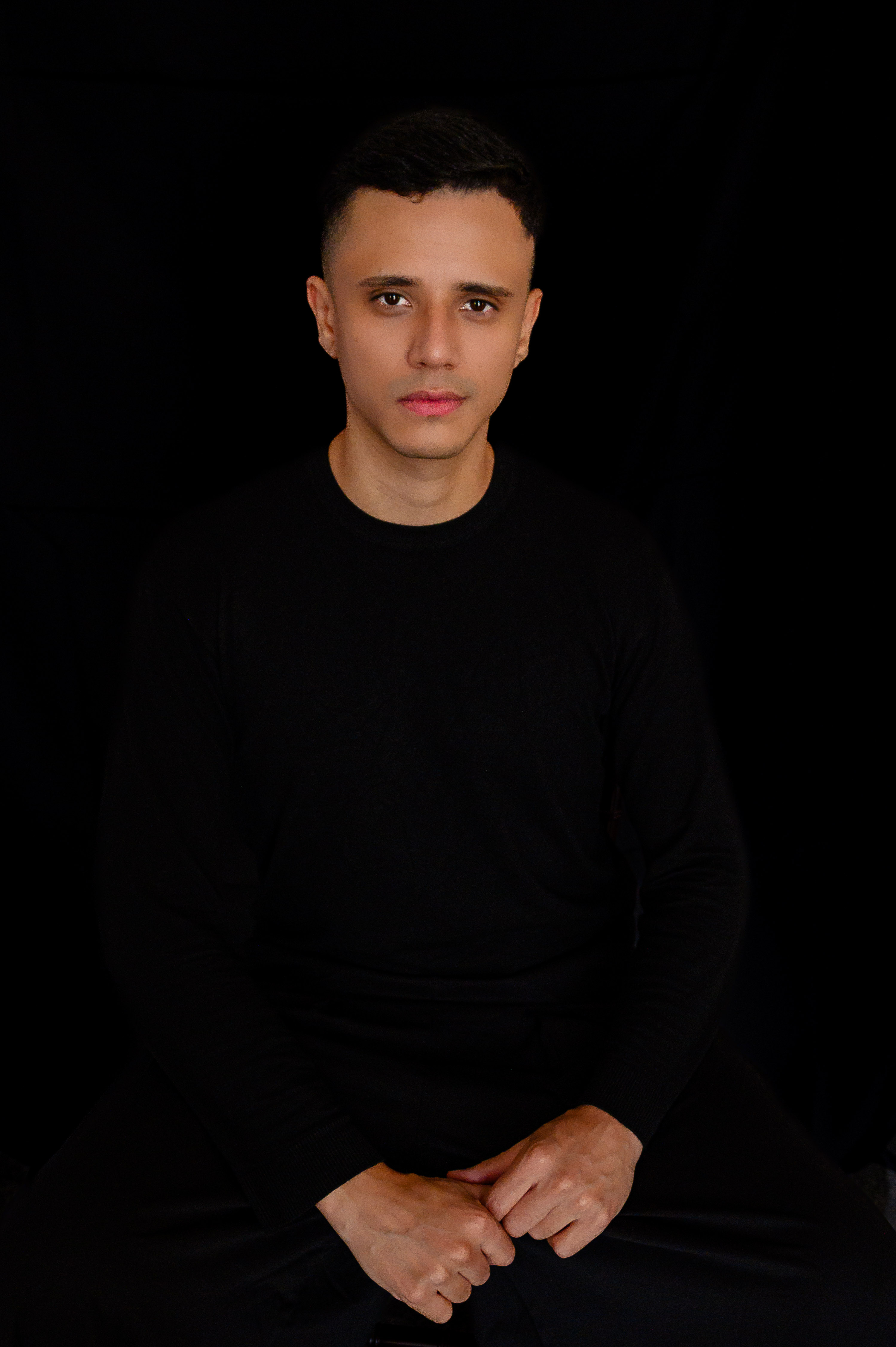
Cássio Pereira
Cássio Pereira is an emerging Brazilian countertenor in the early music scene, recognized for his refined musicianship, expressive stage presence, and distinctive vocal timbre. He has appeared as a guest artist with prominent vocal ensembles and opera productions in the state of São Paulo, including the opera chorus of Theatro São Pedro, the São Paulo State Youth Choir, and productions at Theatro Municipal de São Paulo.
He has devoted his artistic career particularly to the Baroque repertoire and historically informed performance, further developing his studies under the guidance of soprano Marília Vargas. He recently returned from Europe, where he undertook a period of artistic development and musical exchange, expanding his international experience.
How did music become part of your life?
Music entered my life very naturally, during childhood, through the curiosity and emotion I felt when listening to voices and harmonies. Over time, I realized that singing was not merely something I enjoyed doing, but a necessity for self-expression. Discovering the Baroque repertoire and early music completely transformed my relationship with art, because I found in that world a profoundly meaningful and authentic way of communicating feelings through the voice.
Can you share a childhood memory?
One of my strongest childhood memories is singing alone at home while imagining myself on a grand stage. I did not yet understand what vocal technique or an artistic career meant, but I was already deeply enchanted by music. I also remember the emotion of hearing choirs and sacred music for the first time, something that gave me goosebumps even though I could not understand why. Today, I realize that this fascination was already pointing toward the path I would eventually follow in music.
How do you prepare for a concert? Do you have a particular ritual?
Before a concert, I like to prepare with plenty of calm and concentration. I warm up my voice, mentally review the repertoire, and seek to reconnect with the text and the emotional expression of each piece. I also carefully choose what I will wear, because I believe that stage presence is part of interpretation. An important ritual for me is taking a moment of silence before stepping onto the stage, to breathe deeply and connect emotionally with the music I am about to perform.
If you could speak with any Brazilian artist from any era, who would it be?
I would love to speak with Heitor Villa-Lobos. I find it fascinating how he managed to bring together elements of Brazilian music and the classical tradition in such an authentic and innovative way. It would be incredible to hear how he understood Brazilian musical identity and to gain a deeper understanding of his creative process. I imagine it would be a truly inspiring conversation about art, Brazilian identity, and musical freedom.